
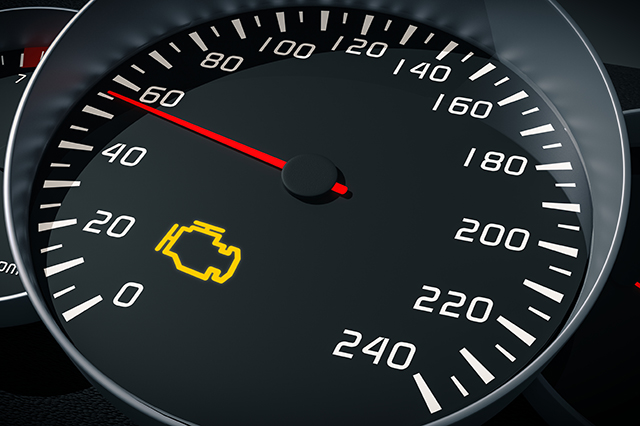
The Scary Truth Behind Your 2026 Check Engine Light. For nearly four decades, the amber “Check Engine” light has been the universal symbol for mechanical anxiety.
It usually meant a loose gas cap, a fouled spark plug, or a failing oxygen sensor. But as we navigate the roads of 2026, the icon once known as the “Malfunction Indicator Lamp” (MIL) has undergone a digital transformation.
In the era of Software-Defined Vehicles (SDVs), your dashboard doesn’t just monitor pistons and valves; it monitors code, cloud handshakes, and encryption keys.
Today, that glowing engine icon might not be telling you about a hardware failure—it might be the first warning that your car’s firewall has been breached.
1. The Rise of the “Software-Defined” Malfunction
By 2026, the average car runs on over 150 million lines of code—more than a Boeing 787 Dreamliner. This shift has turned cars into “data centers on wheels.” While this enables features like autonomous lane-changing and predictive maintenance, it also expands the “attack surface.”
Traditional engine sensors are now managed by electronic control units (ECUs) that are constantly connected to the internet via 5G. If a hacker intercepts a vehicle’s Over-the-Air (OTA) update or gains access to the CAN bus (the car’s internal nervous system), they can spoof sensor data. To the car’s computer, a manipulated data packet looks exactly like a mechanical fault, triggering the Check Engine light as a default safety response.
2. “Ghost in the Machine”: How Hackers Trigger Dashboard Alerts
In 2026, cybersecurity researchers have identified a phenomenon known as “Deceiving Dashboard Warning Lights.” This isn’t just a theory; high-profile events like Pwn2Own Automotive 2026 have demonstrated that hackers can remotely trigger dashboard alerts to:
- Create Deceptive Failures: Forcing a “Limp Mode” to stop a vehicle by mimicking a critical transmission error.
- Mask Real Issues: Disabling the airbag or brake warning lights even when a physical fault exists, posing a severe safety risk.
- Social Engineering: Scammers can trigger the light and simultaneously send a fake “Service Required” notification to the driver’s phone, directing them to a fraudulent repair shop designed to harvest financial data.

3. The New Diagnostic Reality: From Wrenches to Firewalls
When you take your car to a mechanic in 2026, the first tool they reach for isn’t a pressure gauge—it’s a Cyber-Diagnostic Interface.
Modern vehicles now utilize Intrusion Detection and Prevention Systems (IDPS). When the Check Engine light comes on, the technician’s scanner might pull a “Cybersecurity Event” code instead of a traditional P0420 (Catalytic Converter) code. These alerts indicate that the vehicle has detected:
- Unauthorized Message Injection: Someone is trying to send commands to the steering or braking modules.
- Encryption Failures: The car cannot verify the “handshake” from its own internal components.
- Anomalous Data Traffic: The car is sending or receiving significantly more data than normal, often a sign of a “botnet” infection.
4. Regulation 2026: The Law Behind the Light
You might wonder why the car doesn’t just have a “Hacker Alert” light. The reason is regulatory. Under international standards like UN R155 and ISO/SAE 21434, car manufacturers are legally required to manage cybersecurity risks throughout the vehicle’s lifecycle.
However, to avoid driver panic, many manufacturers still route “security-related performance degradation” through the traditional Check Engine light. By 2026, new laws in major markets mandate that if a security breach affects the functional safety of the vehicle (like the engine’s timing or throttle control), the MIL must illuminate to ensure the driver pulls over.
5. What to Do if You Suspect a Cyber-Malfunction
If your Check Engine light comes on in 2026 and the car is behaving strangely—such as the radio volume changing on its own or the GPS showing you in a different city—you may be experiencing a cyber-event.
- Check for OTA Updates: Sometimes a “buggy” security patch can trigger a false positive. Check your settings for any recently installed updates.
- Verify Recalls: Visit the manufacturer’s portal. In 2025 and early 2026, several “Cyber-Recalls” were issued for popular EV and hybrid models to patch vulnerabilities in their infotainment systems.
- Use Trusted Service Centers: Avoid “black-market” software tuning. Unauthorized performance “chips” often bypass the car’s security protocols, making it an easy target for remote exploits.
6. The Future of the Dashboard
Looking toward 2027, we expect to see a dedicated Cyber-Health Icon become standard on digital cockpits. Until then, the humble Check Engine light remains our most vital sentinel. It has evolved from a simple mechanical warning into a sophisticated sentinel guarding the intersection of automotive engineering and digital security.
In 2026, “Check Engine” no longer just means “check your oil.” It means “Check your code.”